close
Choose Your Site
Global
Social Media

Views: 0 Author: Site Editor Publish Time: 2026-09-02 Origin: Site

Buying a new sofa feels incredibly exciting until everyday life happens. Gorgeous showroom pieces often look very different under the harsh glare of household reality. Premature wear, sun bleaching, and structural degradation quickly ruin your living room centerpiece. Replacing a couch early just because the surface fabric failed creates immense financial and environmental waste. High-quality structural frames usually outlast cheap upholstery by many years. You need an evidence-based framework to evaluate these materials effectively. This guide helps you balance tactile comfort with verifiable durability metrics. We will explore long-term sun protection, cleanability standards, and smart selection strategies for high-traffic homes. You will learn exactly how to interpret manufacturer claims before making your final decision.
Metrics Matter: Industry-standard rub counts (Martindale/Wyzenbeek) and UV-resistance ratings are non-negotiable baselines for durability.
Material Reality: The most reliable fade-resistant sofa fabrics rely on solution-dyed synthetics rather than topical treatments.
Comfort Trade-offs: High durability often impacts breathability and texture; smart selection requires balancing household risks (pets/sunlight) with desired tactile feel.
Verification: Always validate performance claims against manufacturer warranties and independent swatch testing before purchase.
You cannot judge a fabric by its showroom appearance. Real durability requires standardized testing. Manufacturers use specific machines to simulate years of household wear in mere days. Understanding these metrics prevents you from buying a beautiful but fragile sofa.
Industry professionals rely on two primary abrasion tests. The United States favors the Wyzenbeek method. This test rubs a piece of cotton duck fabric or wire mesh back and forth over the test fabric. One back-and-forth motion equals one "double rub." Europe prefers the Martindale test. This machine uses wool or wire to rub the fabric in a continuous figure-eight motion. Both tests measure how much friction a material can handle before the yarn breaks or shows severe wear.
When you shop for seating, you must ask for these numbers. Use these baseline targets to match your household needs:
15,000+ rubs: Suitable for light use. Choose this for formal living rooms or bedroom accent chairs.
30,000+ rubs: Designed for active households. This rating handles daily family movie nights and standard wear.
50,000+ rubs: Built for heavy traffic and pets. Commercial-grade fabrics often sit in this tier, providing maximum peace of mind.
Few things ruin a couch faster than pilling. Those tiny fuzz balls make even the most expensive furniture look cheap. Laboratories test pilling resistance and grade it on a 1-5 scale. A score of 5 means no pilling, while a 1 indicates severe degradation.
Loose-weave natural fibers fail this metric frequently. Wool, soft cotton, and loosely spun linen rely on short staple fibers. Friction pulls these short fibers loose, and they tangle into knots. Tightly woven synthetics perform much better. Manufacturers extrude synthetic continuous filament yarns. These long, unbroken strands resist fraying and snagging. If you hate pilling, avoid loose weaves entirely.
Spills happen. How your sofa responds depends on its chemical makeup and cleaning code. The furniture industry uses a standardized coding system to tell you exactly how to treat stains. Ignoring these codes often sets stains permanently or leaves stubborn water rings.
Industry Standard Sofa Cleaning Codes
Cleaning Code | Meaning | Best Practices & Limitations |
|---|---|---|
W | Water-based cleaners only | Use mild detergent and water. Never use harsh solvents. |
S | Solvent-based cleaners only | Requires dry-cleaning chemicals. Water will leave a permanent ring. |
WS / SW | Water or Solvent | Highly versatile. You can use mild detergents or dry-cleaning solvents. |
X | Vacuum only | Never use liquid on this fabric. Brushing and vacuuming only. |
You must also distinguish between inherent stain resistance and topical treatments. Molecularly altered fibers repel liquids naturally. The stain resistance lives inside the yarn itself. Conversely, topical treatments like DWR (Durable Water Repellent) sprays coat the outside of standard fabrics. These sprays degrade over time. Cleaning, sitting, and general friction wear the coating away. Inherent resistance always outperforms temporary topical sprays.
Sunlight acts as a silent destroyer of upholstery. If your living room features large windows, ultraviolet radiation will relentlessly attack your furniture. Understanding how different materials react to UV exposure helps you make a lasting choice.
Photodegradation occurs when UV light breaks down the chemical bonds in textile dyes. The energy from the sun literally shatters the color molecules. Natural fibers suffer the most under direct sunlight. Dark cotton and rich linen absorb UV rays rapidly. The broken dye molecules lose their ability to reflect color accurately, leaving behind a dull, bleached, and patchy surface. This structural breakdown also weakens the fibers, causing them to tear easily after a few years.
When evaluating options, true Fade-Resistant Sofa Fabrics rely heavily on solution-dyed synthetics. The secret lies in the manufacturing process. Traditional fabrics are woven first and then dipped into vats of dye. The color only sits on the outside of the yarn, much like a radish (red on the outside, white on the inside).
Solution dyeing changes the game entirely. Manufacturers add the color pigments directly to the liquid polymer before they extrude it into yarn. The color goes all the way through the fiber, resembling a carrot (orange on the outside, orange on the inside). Solution-dyed acrylics and high-performance polyesters sit at the top tier for sunlit rooms. They block UV degradation at a molecular level.
Standard nylon and polyester blends offer a middle ground. Manufacturers often treat these materials with UV-inhibitor topcoats. These chemical baths provide a secondary defense against sun damage. However, you must view this as a temporary solution. Friction from sitting inevitably wears down the protective coating. Once the topcoat degrades, the underlying standard dye becomes vulnerable to rapid photodegradation. They work well for rooms with indirect sunlight, but they cannot compete with solution-dyed options in a sunroom.
You must practice extreme caution with certain luxurious materials. Silk, linen, and untreated cottons face a high risk of failure in south-facing rooms. Silk shatters and rots under heavy UV exposure. Dark linen bleaches unevenly within months. If you absolutely must use these materials, you need heavy window treatments or UV window films to protect them.
Durability means nothing if your sofa feels like a patio chair. The industry spent decades trying to bridge the gap between bomb-proof strength and inviting softness. Today, you do not have to sacrifice tactile comfort for performance.
Historically, high-durability fabrics felt stiff, scratchy, and uninviting. Consumers heavily criticized early performance fabrics because they felt like canvas tents. Manufacturers prioritized chemical resistance over human comfort. This created the "outdoor furniture" trap. Buyers would put incredibly tough but highly uncomfortable sofas in their main living spaces. Modern textile engineering finally solved this problem by changing how yarns are spun.
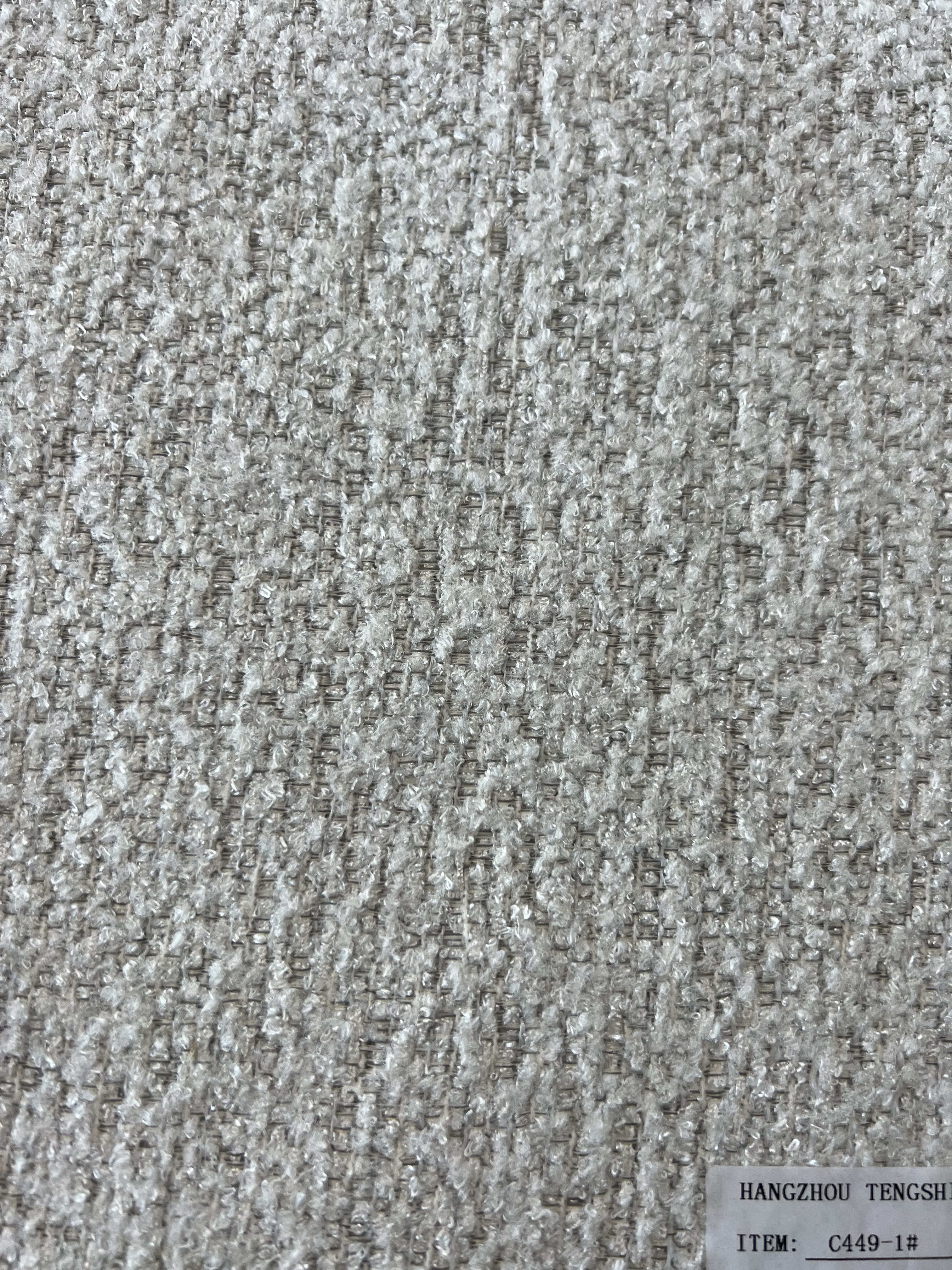
Modern performance yarns use advanced weave structures to improve softness. Chenille and bouclé weaves represent a massive leap forward. Instead of pulling synthetic threads into tight, flat planes, mills spin the yarns with intentional loops and piles. These textured weaves trap air between the fibers. The trapped air creates a cushioning effect, making the synthetic material feel remarkably soft and plush. You get the molecular strength of a high-performance polymer combined with the cozy texture of traditional indoor upholstery.
You must address the thermal retention of synthetic fibers carefully. Synthetics do not breathe like natural cotton. They retain body heat. When manufacturers design liquid-proof fabrics, they often apply a fully sealed polyurethane backing. This backing stops wine and coffee from reaching the cushion foam, but it also traps air and heat. Sitting on a fully sealed fabric during summer months feels sticky and uncomfortable.
To retain breathability, choose tightly woven liquid-repellent fronts instead of fully sealed liquid-proof backings. A repellent front forces liquid to bead up on the surface long enough for you to wipe it away. Because it lacks a solid plastic backing, air can still flow through the microscopic gaps in the weave. This framework keeps you cool while still offering excellent spill protection.
No single fabric works perfectly for every home. Smart selection requires analyzing your specific environmental threats. You must build your shortlist based on the realities of your household daily life.
Primary Need: UV stability and colorfastness.
Material Shortlist: Solution-dyed acrylics and high-grade performance polyesters.
Strategy: If your living room features massive glass panes, prioritizing Fade-Resistant Sofa Fabrics becomes your most important task. Avoid dark natural colors. Stick to lighter shades of solution-dyed materials to minimize visible fading over a decade of use.
Primary Need: Snag resistance, odor control, and easy fur release.
Material Shortlist: Tight-weave microfibers and synthetic velvets.
Strategy: Cats love scratching loose threads. You must avoid tweed, loose chenille, or basket weaves. Microfiber mimics the feel of suede but weaves the threads so tightly that claws cannot easily penetrate. Additionally, pet fur wipes off flat velvet much easier than it does off textured wool.
Primary Need: Non-porous barriers and "WS" code cleanability.
Material Shortlist: Crypton fabrics, Olefin, and molecularly treated poly-blends.
Strategy: Kids bring sticky fingers, juice boxes, and unpredictable messes. You need fabrics that repel moisture instantly. Olefin resists stains naturally without chemical coatings. Crypton uses an integrated moisture barrier that prevents odors and liquids from reaching the cushion interior.
Even the best materials fail if you misunderstand their limitations. Marketing departments often use broad terms that confuse buyers. You must protect your investment by reading the fine print and conducting your own tests.
You must clarify your expectations immediately. No fabric is 100% immune to UV damage indefinitely. The term "fade-proof" is a marketing myth. Over a long enough timeline, the sun damages everything. You should look for "fade-resistant" ratings. A high-quality fade-resistant material might show a 5% color shift over five years, whereas an untreated cotton couch might lose 40% of its color in a single summer. Manage your expectations realistically.
Manufacturer warranties contain numerous traps. Most standard indoor furniture warranties explicitly exclude sun damage. They classify UV degradation as "improper use" unless the fabric carries a specific rating for outdoor or high-UV indoor exposure.
Furthermore, many consumers ruin their warranties by applying aftermarket sprays. If you buy a sofa and spray it with a generic stain guard or UV protector from the hardware store, you immediately void the manufacturer warranty. The chemicals in aftermarket sprays can react poorly with factory dyes, causing immediate discoloration or stiffening.
Never buy a couch based purely on a digital photo. Monitors display colors inaccurately, and you cannot feel durability through a screen. Follow this actionable protocol before finalizing any purchase:
Order physical swatches of your top three choices.
Tape half of each swatch to your south-facing window. Leave the other half in a dark drawer.
Wait one week. Compare the window swatches to the drawer swatches to check for early UV degradation.
Place the swatches flat on a counter. Pour a teaspoon of water and a drop of coffee on each.
Wait five minutes, then try to blot the stains away with a dry paper towel.
Rub a key across the surface to test for snagging and scratch resistance.
This simple protocol reveals more about long-term durability than any sales brochure ever could.
The smartest fabric pick always sits directly at the intersection of your room's environmental threats and your personal comfort preferences. You do not have to accept a tradeoff between a beautiful aesthetic and rugged durability. By understanding rub counts, cleaning codes, and the chemistry behind photodegradation, you can secure an investment that survives real life.
Audit your living space today. Note the direction of your windows, assess the daily habits of your pets, and determine your realistic cleaning routine. Check the Wyzenbeek or Martindale ratings of your top choices. Order physical swatches immediately to begin your at-home testing protocol.
Ready to upgrade your living space? Explore our curated collection of performance-tested seating options or book a design consultation today to find the perfect match for your household.
A: Solution-dyed acrylics and specific performance polyesters engineered for UV stability offer the best fade resistance. Because the color pigment is mixed into the liquid polymer before the yarn is created, the color remains locked inside the fiber, strongly resisting sun bleaching.
A: Low-E glass and UV films significantly reduce fading, but they do not eliminate it entirely. Visible light and heat also contribute to photodegradation. High-performance fabrics are still highly recommended for direct-exposure areas to ensure longevity.
A: Microfiber holds dye exceptionally well and resists fading much better than natural fibers like cotton or linen. However, untreated microfiber will eventually fade under heavy, direct UV exposure. For intense sunlight, it still falls short of solution-dyed acrylics.
A: Install quality window treatments like blinds or UV shades. Rotate your cushions regularly to ensure even wear. Strategically place the couch away from south-facing windows. Avoid using generic UV protection sprays, as they often alter the fabric texture and void warranties.